
Introduction
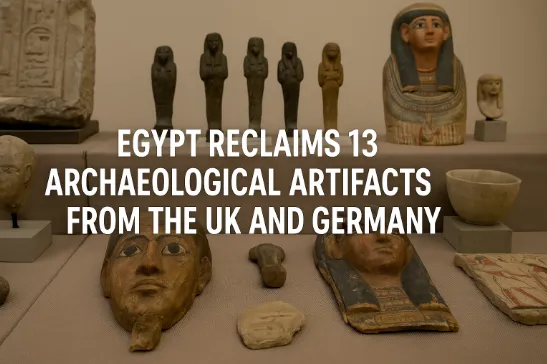
On August 11, 2025, Egypt stands at the forefront of cultural repatriation, celebrating the successful reclamation of 13 priceless archaeological artifacts from the United Kingdom and Germany. This milestone not only marks a triumph for heritage preservation but also ignites exceptional opportunities for leading future projects - from immersive exhibitions to educational initiatives and international collaborations. Through coordinated diplomacy, meticulous restoration, and visionary planning, Egypt showcases its unwavering commitment to safeguarding its legacy and engaging the global community in meaningful dialogue.
Repatriation Efforts and International Collaboration
The recovery of these artifacts results from a multi-institutional collaboration. The Ministry of Tourism and Antiquities, Supreme Council of Antiquities (SCA), the Ministry of Foreign Affairs, and the Ministry of Immigration and Egyptian Expatriates’ Affairs, worked closely with counterparts in London and Hamburg to bring these items home (See News). In the UK, the London Metropolitan Police intercepted and confiscated ten objects, confirming their illicit removal through a sophisticated antiquities trafficking network (See News). From Germany, Hamburg city museum authorities initiated return procedures upon determining the illegal export of three additional relics (See News).
Details of Recovered Treasures
Artifacts from the United Kingdom
A New Kingdom limestone funerary stela, featuring “Baser,” a master builder, in reverent homage to gods Osiris, Isis, and the Four Sons of Horus - an evocative glimpse into ancient beliefs and art (See News).
A small red baboon amulet, symbolizing protection and guidance in the afterlife (See News).
A green faience-based vessel and a blue faience funerary jar from the 18th Dynasty, reflecting elite funerary customs (See News).
A bronze crown fragment from a statue of Osiris - adorned with a feather, serpent (cobra), and ram’s head - dating between the 22nd and 26th Dynasties (See News).
A beaded funerary mask from the 26th Dynasty and assorted faience and black stone funerary amulets, each bearing stories of ritual and reverence (See News).
Artifacts from Germany
A skull and a hand from an unidentified mummy, rare and deeply personal remnants of human life in antiquity (Xinhua News).
An Ankh amulet, the enduring symbol of life in ancient Egyptian spiritual lore (Xinhua News).
Conservation and Exhibition Plans
Once repatriated, the artifacts were entrusted to the Egyptian Museum in Cairo - their custodians - for careful maintenance and restoration ahead of inclusion in a special exhibition of recently recovered antiquities (Xinhua News). This exhibit promises to honor the integrity of each piece, educate visitors about repatriation, and underscore Egypt’s enduring commitment to cultural stewardship.
Transformative Opportunities Ahead
These recovered treasures unlock a wealth of exceptional opportunities for leading archaeological, educational, and cultural projects:
Immersive, Narrative-Driven Exhibitions
The exhibition can offer virtual reality or augmented reality tours, reviving ancient sacred practices and crafts tied to each artifact. Imagine exploring the stela’s devotional scene or walking through the process of crafting a funerary mask.
Educational Collaborations & Public Engagement
Partnerships with universities, schools, and international museums can elevate curricula, workshops, and symposia centered on repatriation, archaeology, and heritage ethics.
Digital Storytelling & Global Outreach
Launching interactive digital platforms, microsites, and social campaigns - featuring artifact 3D models - can attract global audiences and disseminate rich historical narratives.
Conservation Training & Capacity Building
Workshop series led by restoration experts can strengthen local skill pools and ignite a new generation of heritage custodians.
Cultural Diplomacy & International Relations
This achievement strengthens Egypt’s diplomatic ties with the UK and Germany and can be a springboard for future cultural exchange programs and joint archaeological missions.
Publishing & Scholarly Documentation
Producing detailed catalogues, academic papers, and multimedia storytelling around the recovered artifacts will amplify their importance within the global historical discourse.
Sustainable Cultural Tourism
Embedding the exhibition within broader heritage tourism strategies - especially in Cairo - can draw history-conscious travelers and inspire deeper cultural appreciation.
Why This Matters: A Humanized Perspective
Each recovered artifact is more than a relic - it’s a human story, a fragment of lives long gone, preserved through time. The repatriation marks not only justice for Egypt’s heritage but also acknowledgment of global responsibility in protecting cultural property.
As these ancient objects transition from foreign custody back to their place of origin, they become tangible bridges to the past - inviting reflection, research, and respect. These projects - rooted in community, scholarship, and storytelling - uplift these treasures beyond mere museum display into living legacies.
Conclusion
On August 11, 2025, Egypt's reclamation of 13 archaeological artifacts from the UK and Germany shines as a beacon of cultural triumph and exceptional opportunity. From immersive exhibitions to educational empowerment, digital innovation to diplomatic collaboration, the future of these relics lies not solely in preservation - but in inspired engagement.
Egypt reaffirms its role as a guardian of millennia of history, offering the world a chance to walk alongside its ancestors, study, honor, and celebrate the civilization that shaped human identity. With these new treasures restored, the path ahead brightens for groundbreaking projects that honor the past and enrich the present.